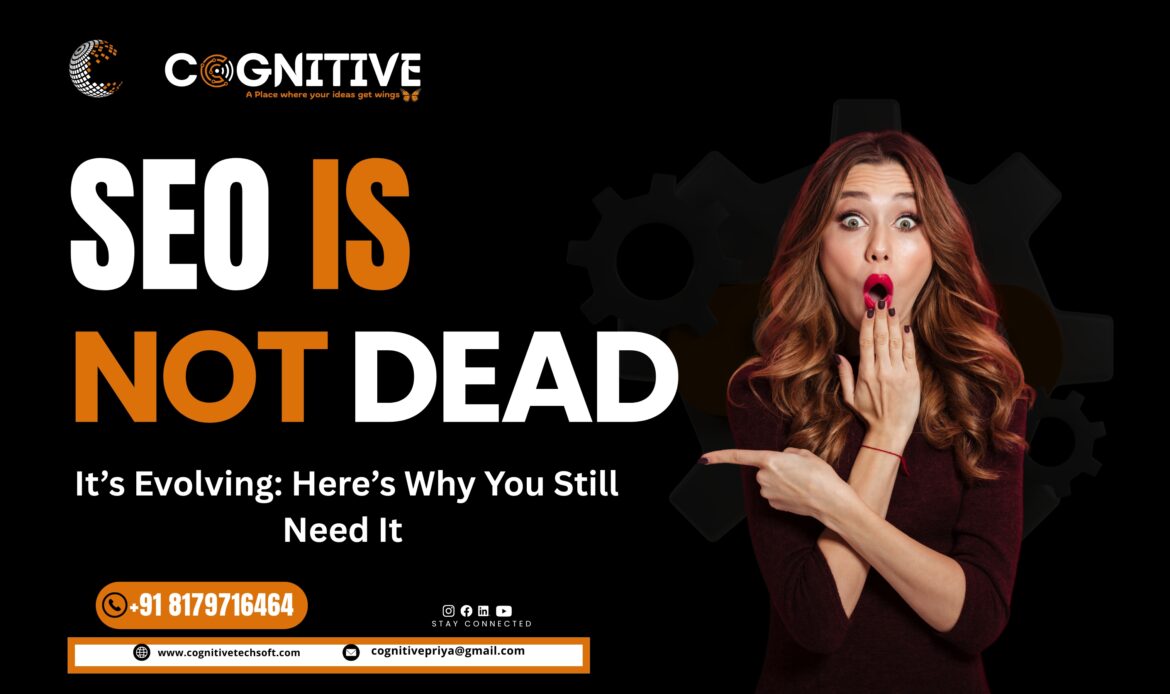
Every few years, someone declares “SEO is dead.”
It happened when social media became popular.
It happened when paid advertising grew.
It happened with voice search.
And now, with AI-powered search experiences like Google AI Overviews, ChatGPT, Gemini, and Microsoft Copilot, many businesses are once again asking:
“Is SEO still worth investing in?”
The answer is simple:
SEO isn’t dead—it has evolved.
Today’s SEO is no longer just about ranking for keywords. It’s about building trust, demonstrating expertise, creating helpful content, and ensuring your business is visible wherever people search—whether that’s Google, AI assistants, voice search, or local maps.
If your business wants sustainable online growth, SEO remains one of the most valuable long-term marketing investments.
Why People Think SEO Is Dead
Several changes in search behaviour have led to this misconception.
People now discover businesses through:
- Google AI Overviews
- ChatGPT
- Google Maps
- Voice assistants
- YouTube
- Social media platforms
- AI-powered search engines
Because search results look different today, many assume traditional SEO no longer matters.
In reality, these platforms still rely heavily on high-quality, trustworthy web content. Strong SEO practices make it more likely that your content will be surfaced, cited, or recommended.
How SEO Has Changed
Modern SEO focuses on delivering the best possible experience for users—not simply targeting search engines.
Google’s algorithms now evaluate:
- Content quality
- User experience
- Website speed
- Mobile responsiveness
- Expertise and credibility
- Helpful, original content
- Search intent
- Technical performance
Businesses that focus on these areas are more likely to earn visibility over time.
SEO in the Age of AI
Artificial intelligence has changed how people search, not whether they search.
Instead of typing:
People might ask:
AI search engines look for content that provides clear, comprehensive, and trustworthy answers.
To perform well, your content should:
- Answer real customer questions.
- Explain topics clearly.
- Include practical examples.
- Demonstrate expertise.
- Be easy to scan with headings and structured sections.
Why SEO Still Delivers Long-Term Value
Unlike paid advertising, SEO can continue bringing visitors to your website long after content is published.
Key benefits include:
- Consistent organic traffic
- Higher-quality leads
- Increased brand credibility
- Better user experience
- Reduced reliance on paid advertising
- Sustainable business growth
When your website ranks well, customers can find your business at the exact moment they’re searching for your services.
The Pillars of Modern SEO
1. Helpful Content
Google rewards content that genuinely helps users.
Instead of writing for algorithms, focus on answering questions your audience is asking.
Examples include:
- How much do SEO services cost?
- What is Local SEO?
- How does Google Ads work?
- Why is website speed important?
Helpful content naturally attracts traffic and builds trust.
2. Search Intent Matters More Than Keywords
Ranking for a keyword is no longer enough.
You need to understand why someone is searching.
For example:
Someone searching:
“Digital marketing agency in Hyderabad”
is likely looking to hire an agency.
Someone searching:
“What is digital marketing?”
is looking for educational information.
Creating content that matches the user’s intent leads to better engagement and stronger rankings.
3. Technical SEO Is Essential
Even great content can struggle if your website has technical issues.
Modern technical SEO includes:
- Fast page speed
- Mobile-friendly design
- Secure HTTPS
- Clean URL structure
- XML sitemaps
- Structured data (Schema Markup)
- Optimised Core Web Vitals
- Proper internal linking
These improvements help both users and search engines understand your website.
4. Local SEO Drives Nearby Customers
For businesses serving specific locations, local SEO is one of the highest-return marketing strategies.
Optimise:
- Google Business Profile
- Local service pages
- Customer reviews
- Business information consistency
- Location-based keywords
Appearing in Google Maps and local search results can significantly increase enquiries from nearby customers.
5. User Experience Influences Rankings
Google wants users to find useful information quickly.
Your website should:
- Load in seconds
- Be easy to navigate
- Work on all devices
- Include clear calls to action
- Offer valuable information
A better experience often leads to more enquiries and longer visit durations.
AI and SEO Work Together
Rather than replacing SEO, AI is becoming a valuable tool for improving it.
Businesses can use AI to:
- Discover keyword opportunities
- Analyse competitors
- Generate content ideas
- Improve content structure
- Identify search trends
- Monitor performance
However, successful SEO still depends on human expertise, originality, and understanding your audience. AI can assist, but it should not replace thoughtful strategy or accurate information.
Common SEO Myths
Myth 1: SEO Is Dead
Reality: SEO continues to evolve as search behaviour changes.
Myth 2: Paid Ads Replace SEO
Reality: Paid advertising provides immediate visibility, while SEO builds long-term organic growth. Many businesses benefit from using both together.
Myth 3: More Keywords Mean Better Rankings
Reality: Overusing keywords can reduce readability. Focus on writing naturally and answering users’ questions.
Myth 4: AI Can Do All Your SEO
Reality: AI is a helpful assistant, but successful SEO requires strategy, editing, technical optimisation, and subject-matter expertise.
Why Businesses Still Need SEO
Whether you’re a hospital, educational institution, interior designer, real estate company, retailer, or local service provider, your customers are searching online every day.
SEO helps your business:
- Increase website traffic
- Build credibility
- Generate qualified leads
- Improve brand awareness
- Compete with larger businesses
- Reduce long-term customer acquisition costs
Without SEO, your business risks becoming less visible as competitors strengthen their online presence.
Why Choose Cognitive TechSoft for SEO?
At Cognitive TechSoft, we combine proven SEO practices with data-driven insights and AI-assisted analysis to help businesses improve their online visibility.
Our SEO services include:
- Technical SEO Audits
- Keyword Research
- On-Page SEO
- Local SEO
- Content Strategy
- Link Building
- Google Business Profile Optimisation
- Website Speed Optimisation
- Schema Markup Implementation
- Monthly Performance Reporting
Our focus is on creating sustainable growth through ethical SEO strategies tailored to your business goals.
The Future of SEO
SEO is moving towards a more holistic approach that prioritises user value.
Businesses that will succeed are those that:
- Publish original, useful content.
- Build trustworthy websites.
- Optimise for mobile users.
- Improve technical performance.
- Understand customer intent.
- Adapt to AI-assisted search experiences.
As search technology continues to evolve, the fundamentals remain consistent: create content that helps people and make it easy for them to find and use.
Conclusion
SEO has never been about chasing algorithms—it has always been about helping people find the information they need.
While AI, voice search, and new search experiences are changing how people discover content, they haven’t eliminated the need for high-quality websites or useful information.
Businesses that invest in modern SEO are better positioned to earn visibility, attract qualified visitors, and build long-term growth.
Rather than asking whether SEO is dead, the better question is:
“Is my business adapting to the way people search today?”
If the answer is yes, SEO will continue to be one of your most valuable digital marketing assets.
Frequently Asked Questions
Is SEO still relevant in 2026?
Yes. SEO remains essential for improving visibility in traditional search engines and supporting discoverability in AI-powered search experiences.
Has AI replaced SEO?
No. AI changes how people search and helps businesses analyse data, but SEO is still needed to create trustworthy, structured, and useful content.
How long does SEO take to show results?
SEO is a long-term strategy. While timelines vary depending on competition and website condition, consistent optimisation typically produces gradual improvements over several months.
Should I invest in SEO or paid advertising?
They serve different purposes. Paid advertising can generate immediate traffic, while SEO builds sustainable organic visibility. Combining both often provides the strongest overall results.
What makes modern SEO different?
Modern SEO emphasises user intent, content quality, technical performance, local optimisation, and credibility rather than simply repeating keywords.